Lead Generation is the engine that drives modern business growth. Companies in 2026 compete in global markets where buyers expect trust, value, and clear communication before they make a decision. Strong systems help businesses find the right people, guide them through the buying journey, and build long-term relationships. Without a clear strategy, even the best products struggle to grow.
Today, lead Generation is no longer about collecting random contact details. It focuses on quality, personalization, and helpful experiences. Smart businesses in the USA and UK use modern tools to understand customer behavior, build trust, and turn interest into revenue. Our guide will share the most trusted tools and strategies to help you grow faster and smarter.
Why Lead Generation Matters More in 2026
Markets are crowded. Customers research before buying. Privacy rules are stricter. Because of this, businesses must focus on meaningful engagement instead of aggressive selling. Modern lead Generation builds trust and improves customer experience.
Key reasons why this matters now:
- Privacy and data protection laws are strict
- Buyers expect value before sharing data
- Digital competition continues to grow
- Trust influences every decision
- Personalization improves engagement
- Automation supports faster response
Companies that invest in strong lead Generation build predictable revenue and reduce marketing waste.
How to Choose the Best Lead Generation Tools
Choosing tools should start with your goals. The right platform supports your growth stage and customer journey. Many businesses fail because they copy competitors rather than build a clear strategy.
Consider these factors before selecting tools:
- Ease of use and learning curve
- Integration with existing systems
- Data privacy and security
- Automation and personalization
- Reporting and analytics
- Customer support and training
The right decisions improve long-term lead Generation and create stability.
Summary Table of the 20 Best Lead Generation Tools
This quick comparison helps businesses choose the right tools based on goals, budget, and growth stage. Each platform supports different parts of the lead Generation journey, from attracting visitors to converting them into loyal customers.
20 Best Lead Generation Tools in 2026
Lead Generation plays a central role in business growth in 2026. Companies now focus on attracting the right prospects instead of collecting random contacts. Modern tools help teams understand customer needs, build trust, and guide people through the buying journey. This approach improves quality, conversion, and long-term relationships.
Today, lead Generation platforms combine automation, data insights, and personalized experiences. Businesses in the USA and UK use these solutions to stay competitive, meet privacy expectations, and grow faster. The tools below highlight the most trusted and effective options to help you generate high-quality leads in 2026.
1. HubSpot
HubSpot is one of the most trusted platforms for modern lead Generation because it brings marketing, sales, and customer service into one system. Businesses use it to attract visitors, nurture leads, and convert prospects through automation. It works well for startups, SaaS companies, agencies, and growing teams.
Key Features
- Built-in CRM that tracks contacts and supports organized lead Generation across teams.
- Email automation and workflows that nurture leads and improve engagement.
- Landing pages and forms are designed to capture high-quality prospects.
- Reporting dashboards that help improve campaign performance.
- Personalization tools that deliver targeted messages to users.
- Strong integrations with analytics, sales, and customer support tools.
Use Cases
- Inbound marketing with SEO and helpful content.
- B2B and SaaS nurturing campaigns.
- Agencies managing client growth strategies.
- Sales and marketing alignment.
Limitations
- Advanced plans become expensive over time.
- Setup and customization need planning.
- Some features require training.
- Smaller teams may not use all tools.
Pricing
- Free CRM and basic tools are available.
- Starter plans begin around $15–$20 per user monthly.
- Professional plans from $800+, depending on automation and features.
- Enterprise pricing is custom-based on contacts and business needs.
2. Salesforce Marketing Cloud
Salesforce Marketing Cloud supports enterprise-level lead Generation through deep data insights and advanced automation. Large organizations use it to manage customer journeys, personalize campaigns, and improve engagement at scale. It is ideal for companies operating in global markets that need strong analytics and compliance.
Key Features
- Customer journey mapping for personalized experiences.
- Predictive insights to improve targeting and conversion.
- Advanced segmentation and audience management.
- Multi-channel marketing across email, mobile, and ads.
- AI recommendations that improve campaign results.
- Enterprise-grade data security and compliance.
Use Cases
- Global campaigns and brand growth.
- Enterprise B2B marketing.
- Personalized customer journeys.
- Advanced automation strategies.
Limitations
- High cost for small businesses.
- Complex onboarding process.
- Requires skilled teams.
- Long setup timelines.
Pricing
- Growth edition from about $1,500 per month.
- Advanced plans are around $4,000+ monthly.
- Premium and enterprise custom pricing.
- Costs depend on features, automation, and contacts.
3. OptinMonster
OptinMonster is a powerful website conversion tool designed to improve lead Generation through smart pop-ups and behavior targeting. Businesses use it to capture visitors, grow email lists, and increase engagement. It works well for blogs, eCommerce, and SaaS websites looking to turn traffic into real leads.
Key Features
- Exit-intent popups that capture leaving visitors.
- Smart targeting based on behavior and location.
- A/B testing to improve conversion rates.
- Mobile-friendly and responsive campaigns.
- Trigger-based automation for personalization.
- Real-time analytics for performance insights.
Use Cases
- Email list growth.
- Lead magnets and offers.
- eCommerce promotions.
- Blog and content marketing.
Limitations
- Needs strong website traffic.
- Limited free options.
- Design and copy impact results.
- Continuous testing required.
Pricing
- Basic plans start around $9–$19 per month.
- Plus and Pro plans from $29–$49 monthly.
- Growth plans vary depending on features.
- Pricing increases with campaign scale.
4. LinkedIn Sales Navigator
LinkedIn Sales Navigator is a premium B2B lead Generation tool that helps sales teams find decision-makers and build professional relationships. It offers advanced filters, insights, and outreach features. Companies in the USA and UK use it to support account-based marketing and long-term partnerships.
Key Features
- Advanced search filters for precise targeting.
- Lead and company recommendations.
- Real-time alerts and insights.
- CRM integration and tracking.
- Messaging tools for outreach.
- Account-based marketing support.
Use Cases
- B2B prospecting.
- Account-based strategies.
- Enterprise sales.
- Relationship building.
Limitations
- High subscription cost.
- Requires active engagement.
- Competitive environment.
- Longer sales cycles.
Pricing
- Core plan from about $99 per month.
- Advanced plans cost around $149–$179 monthly.
- Enterprise pricing cis ustom.
- Free trial available.
5. Mailchimp
Mailchimp is a popular email marketing platform that supports lead Generation through automation, segmentation, and simple design tools. Businesses use it to nurture prospects, share updates, and build customer relationships. It is ideal for startups, eCommerce brands, and small businesses.
Key Features
- Email automation and campaign workflows.
- Audience segmentation for targeted communication.
- Templates for fast design.
- Landing pages and signup forms.
- Performance tracking and analytics.
- Integration with eCommerce and CRM tools.
Use Cases
- Email newsletters.
- Customer nurturing.
- Product promotions.
- Small business growth.
Limitations
- Limited advanced automation.
- Costs increase with contacts.
- Design flexibility is basic.
- Scaling challenges.
Pricing
- Free plan available.
- Essentials plans from about $13 per month.
- Standard and Premium plans are higher.
- Pricing increases based on subscribers and features.
6. Drift
Drift is a conversational marketing platform that improves lead Generation by engaging website visitors in real time. Businesses use chatbots and live chat to answer questions, qualify leads, and book meetings instantly. It works well for SaaS, B2B, and service companies that want faster response and higher conversion.
Key Features
- AI chatbots that qualify visitors and collect lead information automatically.
- Real-time live chat that improves engagement and customer experience.
- Meeting scheduling inside conversations to reduce friction.
- Personalization based on user behavior and traffic sources.
- Automation workflows that support sales and marketing teams.
- Analytics and reporting that improve campaign performance and results.
Use Cases
- SaaS and B2B websites.
- Product demos and consultations.
- Customer support and engagement.
- Lead qualification and routing.
Limitations
- Requires steady website traffic.
- Set up and training needed.
- Can be expensive for small teams.
- Continuous monitoring is required.
Pricing
- Limited free version available.
- Paid plans use custom pricing.
- Costs depend on automation and features.
- Enterprise plans are available for large teams.
7. Intercom
Intercom helps businesses improve lead Generation through messaging, automation, and customer support. It combines chat, email, and product communication to guide users from first visit to conversion. Many SaaS and product-led companies use it to build strong relationships and improve customer experience.
Key Features
- Customer messaging across web and mobile platforms.
- Automation that nurtures leads and supports onboarding.
- Segmentation for targeted communication and personalization.
- Chatbots that answer common questions and qualify leads.
- Integration with CRM and marketing tools.
- Analytics that measure engagement and customer behavior.
Use Cases
- Product-led growth strategies.
- Customer onboarding and support.
- SaaS engagement and retention.
- Relationship building.
Limitations
- Pricing can increase quickly.
- Set up and planning are required.
- Learning curve for teams.
- Needs a strong strategy.
Pricing
- Starter plans from about $39 per month.
- Advanced plans cost more based on contacts.
- Custom enterprise pricing available.
- Costs depend on automation and features.
8. Leadpages
Leadpages is a landing page platform designed to improve lead Generation by helping businesses create high-converting pages. It offers templates, testing, and integrations that support campaigns. It is popular among marketers, entrepreneurs, and small companies launching products and services.
Key Features
- Conversion-focused templates for fast page creation.
- Mobile-friendly designs that improve user experience.
- A/B testing to optimize performance and results.
- Integrations with CRM and email platforms.
- Hosting and analytics included.
- Drag-and-drop builder with no coding required.
Use Cases
- Campaign landing pages.
- Product launches.
- Lead magnets and offers.
- Paid traffic optimization.
Limitations
- Limited design flexibility.
- Template dependency.
- Advanced features cost more.
- Basic analytics compared to competitors.
Pricing
- Standard plans cost about $37 per month.
- Pro plans cost around $74 monthly.
- Advanced plans custom pricing.
- Discounts available with annual billing.
9. Unbounce
Unbounce focuses on conversion optimization and testing to improve lead Generation. Businesses use it to build landing pages, test designs, and optimize campaigns. It supports marketers who rely on paid traffic and want better results through data-driven experimentation.
Key Features
- A/B testing to improve conversions.
- Smart traffic that sends users to the best pages.
- Landing page builder and popups.
- Integrations with marketing tools.
- Personalization and dynamic content.
- Detailed analytics and performance tracking.
Use Cases
- Paid ad campaigns.
- Conversion testing.
- Optimization strategies.
- Growth marketing.
Limitations
- Learning curve for beginners.
- Higher pricing.
- Needs traffic to test.
- Continuous optimization required.
Pricing
- Launch plans from about $99 per month.
- Optimize and accelerate plans higher.
- Enterprise pricing is custom.
- Costs depend on traffic and features.
10. Zapier
Zapier connects tools and automates workflows to support modern lead Generation. Businesses use it to move data between platforms, reduce manual work, and improve efficiency. It is ideal for startups, agencies, and growing companies that want to scale operations without coding.
Key Features
- No-code automation that connects marketing tools.
- Triggers and workflows that improve productivity.
- Integration with thousands of apps.
- Data syncing across CRM and platforms.
- Custom workflows for lead management.
- Time-saving automation for teams.
Use Cases
- Marketing automation.
- Lead routing and nurturing.
- Workflow optimization.
- Data management.
Limitations
- Costs increase with usage.
- Complex workflows need planning.
- Task limits on lower plans.
- Requires testing.
Pricing
- Free plan available.
- Starter plans from about $20 per month.
- Professional and team plans are higher.
- Pricing based on task volume.
11. ActiveCampaign
ActiveCampaign is a powerful platform that combines email marketing, CRM, and automation to improve lead Generation. Businesses use it to create personalized customer journeys and nurture prospects with behavior-based messaging. It works well for growing companies that want advanced automation without enterprise complexity.
Key Features
- Advanced automation workflows that improve engagement and conversions.
- Email marketing with personalization based on user behavior.
- Built-in CRM for tracking prospects and managing sales pipelines.
- Segmentation tools that support targeted campaigns and messaging.
- Customer journey mapping to guide leads toward purchase.
- Reporting and analytics that improve decision-making.
Use Cases
- Personalized email nurturing campaigns.
- Customer journey and lifecycle marketing.
- Small and mid-sized business growth.
- Automation-driven lead management.
Limitations
- Setup requires planning and time.
- Learning curve for beginners.
- Costs increase as contacts grow.
- Some advanced features are locked in higher plans.
Pricing
- Starter plans begin around $29 per month.
- Plus and Professional plans cost more depending on features.
- Enterprise plans offer custom pricing.
- Pricing increases based on automation, users, and database size.
12. Pardot
Salesforce Pardot is a B2B marketing automation platform designed to support advanced lead Generation and long sales cycles. It helps businesses score, nurture, and qualify leads while aligning marketing and sales teams. It is ideal for enterprises that require deep analytics, compliance, and scalable automation.
Key Features
- Lead scoring and grading to prioritize prospects.
- Automation workflows that nurture long-term leads.
- Segmentation and targeting based on behavior.
- Campaign tracking and reporting.
- CRM integration with Salesforce.
- Advanced analytics and performance insights.
Use Cases
- Enterprise B2B marketing.
- Long and complex sales cycles.
- Account-based strategies.
- High-value lead nurturing.
Limitations
- High cost for small businesses.
- Complex setup and onboarding.
- Requires expert support.
- Long implementation timelines.
Pricing
- Growth plans start around $1,250 per month.
- Advanced and Premium tiers cost significantly more.
- Enterprise pricing is customized.
- Pricing depends on contacts and automation features.
13. CallRail
CallRail helps businesses track phone calls and measure offline lead Generation. It provides insights into which campaigns drive calls and conversions. This is useful for agencies, local businesses, and service providers that rely on phone leads and want better attribution.
Key Features
- Call tracking that connects leads to marketing channels.
- Recording and analytics for performance improvement.
- Attribution reporting to measure ROI.
- Integration with CRM and marketing tools.
- Keyword and campaign tracking.
- Detailed insights into customer behavior.
Use Cases
- Local service businesses.
- Agencies managing client campaigns.
- Multi-channel attribution.
- Phone-based lead tracking.
Limitations
- Focused mainly on call leads.
- Requires setup and configuration.
- Privacy compliance is needed.
- Costs increase with usage.
Pricing
- Starter plans begin around $45 per month.
- Advanced plans cost more based on features.
- Agency packages available.
- Pricing depends on tracking volume and integrations.
14. Typeform
Typeform is a user-friendly platform that improves lead Generation through interactive and conversational forms. Businesses use it to collect customer information, feedback, and survey data while creating engaging experiences. It works well for brands that want to improve user engagement and form completion rates.
Key Features
- Conversational forms that increase engagement.
- Surveys and quizzes for customer insights.
- Logic and personalization based on responses.
- Branding and design customization.
- Integrations with CRM and marketing tools.
- Analytics for performance tracking.
Use Cases
- Lead capture forms.
- Customer feedback and research.
- Surveys and onboarding.
- Interactive engagement campaigns.
Limitations
- Limited free plan.
- Pricing increases with responses.
- Requires thoughtful design.
- Long forms may reduce completion.
Pricing
- Free plan available.
- Basic plans start around $25 per month.
- Advanced tiers cost more depending on features.
- Enterprise pricing is available for large organizations.
15. Google Ads
Google Ads is one of the most powerful platforms for high-intent lead Generation. It allows businesses to target users searching for solutions and deliver relevant ads. Companies in the USA and UK rely on it to drive traffic, conversions, and measurable growth across industries.
Key Features
- Keyword targeting based on user intent.
- Automation and AI are bidding for better results.
- Conversion tracking and reporting.
- Audience segmentation and remarketing.
- Campaign optimization tools.
- Scalable advertising across markets.
Use Cases
- High-intent search campaigns.
- Local and global growth.
- Lead generation landing pages.
- Service-based marketing.
Limitations
- High competition in many industries.
- Requires optimization and testing.
- Costs can increase quickly.
- Needs strong landing pages.
Pricing
- No fixed subscription; pay-per-click model.
- Budget controlled by the advertiser.
- Costs vary based on industry and competition.
- Flexible spending for small and large businesses.
16. Meta Ads
Meta Platforms Ads is a powerful social advertising platform that supports modern lead Generation through detailed audience targeting and retargeting. Businesses use it to reach new users, build brand awareness, and capture leads across Facebook and Instagram. It is ideal for eCommerce, startups, and global brands.
Key Features
- Advanced audience targeting based on interests, behavior, and demographics to improve lead Generation.
- Built-in lead forms that capture user details without leaving the platform.
- Retargeting tools to reconnect with interested users and increase conversions.
- Creative testing to identify high-performing ads.
- Automated campaign optimization using machine learning.
- Detailed analytics and performance tracking for smarter decisions.
Use Cases
- Social media lead campaigns.
- Brand awareness and customer acquisition.
- Retargeting website visitors.
- eCommerce and product promotions.
Limitations
- Privacy rules impact tracking accuracy.
- Ad fatigue reduces performance.
- Costs increase in competitive industries.
- Requires creativity and testing.
Pricing
- No fixed subscription.
- Flexible pay-per-campaign model.
- Daily or monthly budgets are set by the business.
- Costs depend on competition, targeting, and industry.
17. Calendly
Calendly simplifies scheduling and improves lead Generation by removing friction in booking meetings. Businesses use it to convert prospects into consultations, demos, and calls. It is widely used by consultants, SaaS companies, and agencies to streamline the customer journey.
Key Features
- Automated scheduling that allows prospects to book meetings easily.
- Calendar integrations with Google and Outlook for seamless workflows.
- Reminders and notifications to reduce no-shows and improve engagement.
- Custom booking links for different campaigns.
- Time-zone detection for global users.
- Integration with CRM and marketing tools.
Use Cases
- Product demos and consultations.
- Sales meetings and onboarding.
- Service-based businesses.
- Customer success and support.
Limitations
- Limited customization in the free version.
- Branding is removed only in paid plans.
- Advanced features require upgrades.
- Depends on traffic and outreach.
Pricing
- Free plan available.
- Essentials are about $10 per user monthly.
- Professional and Teams plans are higher.
- Enterprise pricing is custom-based on needs.
18. Clearbit
Clearbit improves B2B lead Generation by enriching customer data and identifying high-quality prospects. Businesses use it to personalize campaigns and target the right companies. It works well for SaaS, enterprise sales, and account-based marketing strategies.
Key Features
- Real-time data enrichment for better targeting and segmentation.
- Company and contact insights that improve personalization.
- Integration with CRM and marketing automation tools.
- Website visitor identification for account-based strategies.
- Automation that improves sales and marketing alignment.
- Strong data compliance and privacy controls.
Use Cases
- B2B targeting and personalization.
- Account-based marketing.
- Sales prospecting and enrichment.
- High-value customer identification.
Limitations
- Premium pricing.
- Data gaps in some markets.
- Setup requires planning.
- Compliance management is needed.
Pricing
- Custom pricing based on company size.
- Enterprise-focused packages.
- Costs depend on contacts and features.
- Free trial or demo available.
19. Hunter
Hunter is a popular outreach platform that supports outbound lead Generation through email discovery and verification. Businesses use it to find professional contacts and build targeted campaigns. It is ideal for startups, agencies, and B2B sales teams focused on direct communication.
Key Features
- An email finder that identifies verified business contacts.
- Email verification to improve deliverability and trust.
- Domain search to discover company decision-makers.
- Campaign tools for cold outreach.
- Integration with CRM and automation tools.
- Analytics that track campaign performance.
Use Cases
- Cold email outreach.
- Prospecting and lead research.
- Agency and B2B growth.
- Partnership building.
Limitations
- Accuracy varies in some industries.
- Limited free searches.
- Manual work required.
- Scaling needs planning.
Pricing
- Free plan available.
- Starter plans from about $49 per month.
- Growth and Pro plans are higher.
- Enterprise custom pricing.
20. Woorise
Woorise helps businesses run contests, campaigns, and promotions to improve creative lead Generation. It allows brands to capture leads through interactive experiences. It works well for eCommerce, startups, and social media campaigns that focus on engagement and audience growth.
Key Features
- Contest and giveaway campaigns that attract new prospects.
- Landing pages and forms designed for engagement.
- Email and CRM integrations for automation.
- Custom branding and design options.
- Campaign analytics and tracking.
- Multi-channel promotion and sharing tools.
Use Cases
- Social media growth campaigns.
- Product launches and promotions.
- Email list building.
- Audience engagement strategies.
Limitations
- Requires a strong marketing strategy.
- Traffic is needed for success.
- Limited advanced automation.
- Niche use cases.
Pricing
- Free plan available.
- Pro plans from about $23 per month.
- Advanced plans higher.
- Enterprise custom options
Best Practices for Lead Generation in 2026
Modern lead Generation requires strategy, patience, and continuous testing. Businesses must move beyond short campaigns and focus on long-term customer value. Today, success comes from understanding real user needs and building trust at every stage of the journey. Ethical data use and clear communication are now key factors in both conversion and brand reputation.
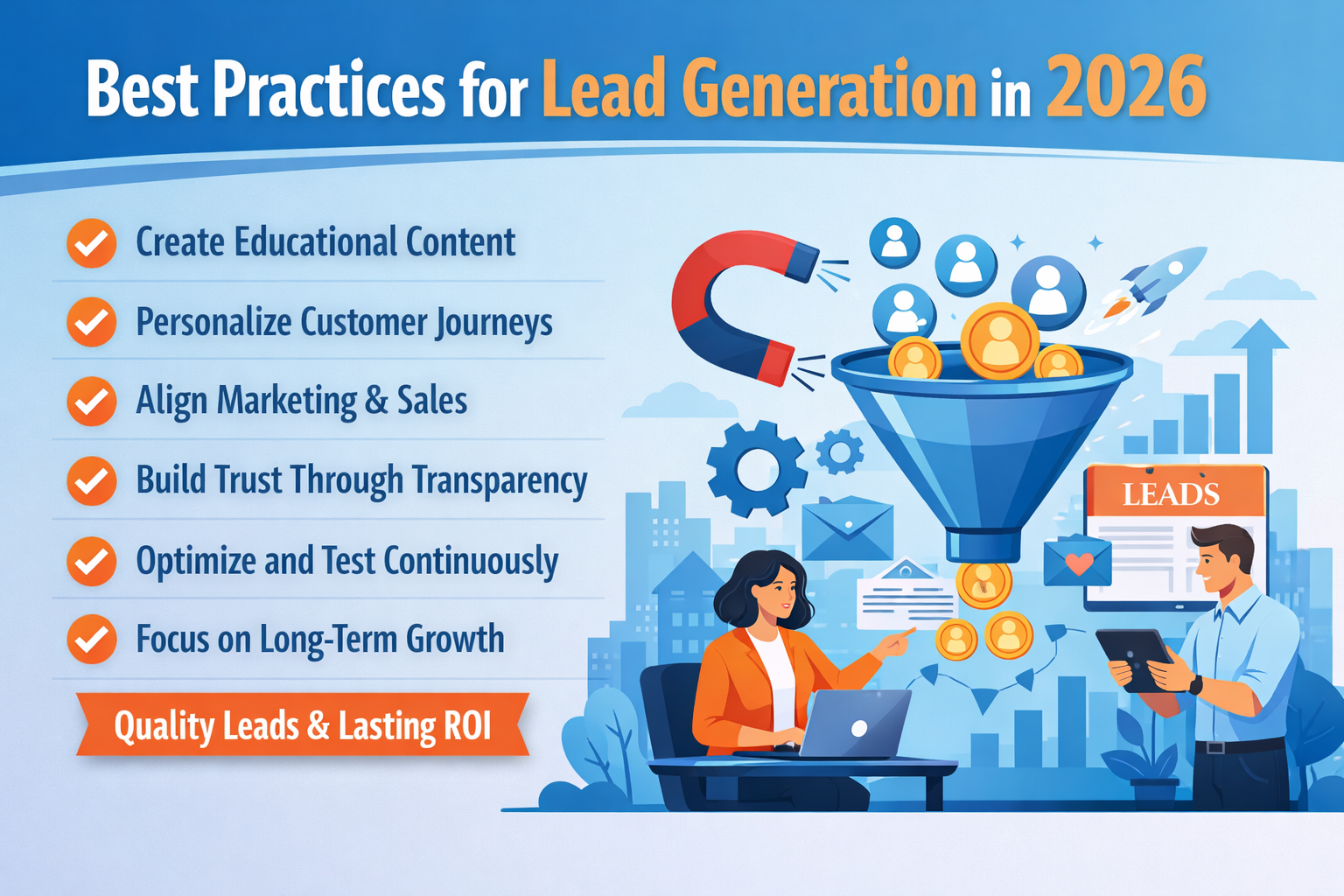
Follow these proven steps:
- Create helpful and educational content that solves real problems and builds authority over time.
- Personalize customer journeys using behavior, interests, and intent to improve engagement.
- Align marketing and sales teams so leads receive consistent communication and faster follow-up.
- Build trust through transparency by clearly explaining how data is used and protected.
- Optimize continuously by testing landing pages, ads, and messaging to improve performance.
- Focus on long-term growth by nurturing relationships instead of chasing quick wins.
- Use automation wisely to save time while maintaining a human and supportive approach.
- Track meaningful metrics such as lead quality and customer lifetime value.
These actions improve lead quality, reduce marketing waste, and increase long-term return on investment.
Common Mistakes Businesses Should Avoid
Many companies fail because they chase tools instead of strategy. Strong lead Generation depends on clarity, consistency, and a deep understanding of customer intent. When businesses rush adoption without planning, they often waste time, budget, and opportunities. Avoiding common mistakes helps build stable and predictable growth.
Avoid these mistakes:
- Weak messaging that focuses on features instead of solving real customer problems.
- Using too many tools without a clear system, which creates confusion and poor data quality.
- Poor follow-up that causes leads to a loss of interest or choosing competitors.
- Ignoring user intent and targeting the wrong audience.
- Lack of testing, which limits learning and performance improvement.
- Short-term thinking that damages trust and brand value.
- Collecting data without offering value in return.
- Over-automation that removes human connection.
Fixing these issues improves stability, trust, and conversion rates over time.
Future of Lead Generation in the USA and UK
Privacy, AI, and trust will shape the future of lead Generation. Businesses in these regions are focusing on ethical data use, personalization, and customer-first strategies. Strong regulations such as GDPR and growing consumer awareness are pushing companies to become more transparent and responsible.
Automation and AI will continue to support smarter targeting, predictive insights, and faster decision-making. However, human judgment will remain central. Companies that combine empathy, technology, and strategy will lead the market. In the coming years, successful brands will focus on trust, education, and meaningful experiences instead of aggressive selling.
Final Thoughts
Lead Generation succeeds when businesses focus on real people and meaningful experiences. Tools support growth, but trust, clarity, and consistency create long-term success. Companies that invest in strategy and learning will stay competitive in global markets.
As technology and privacy evolve, lead Generation will become more personalized and ethical. Businesses that balance automation with human insight will attract loyal customers and build sustainable growth in 2026 and beyond.



.svg)
.svg)
.svg)
.svg)