
OpenAI’s New Superapp Could Redefine AI Chatbots With ChatGPT, Codex Integration is quickly becoming one of the most talked-about shifts in the AI space. Instead of using separate tools for writing, coding, and research, users may soon rely on a single platform that handles everything in one place.
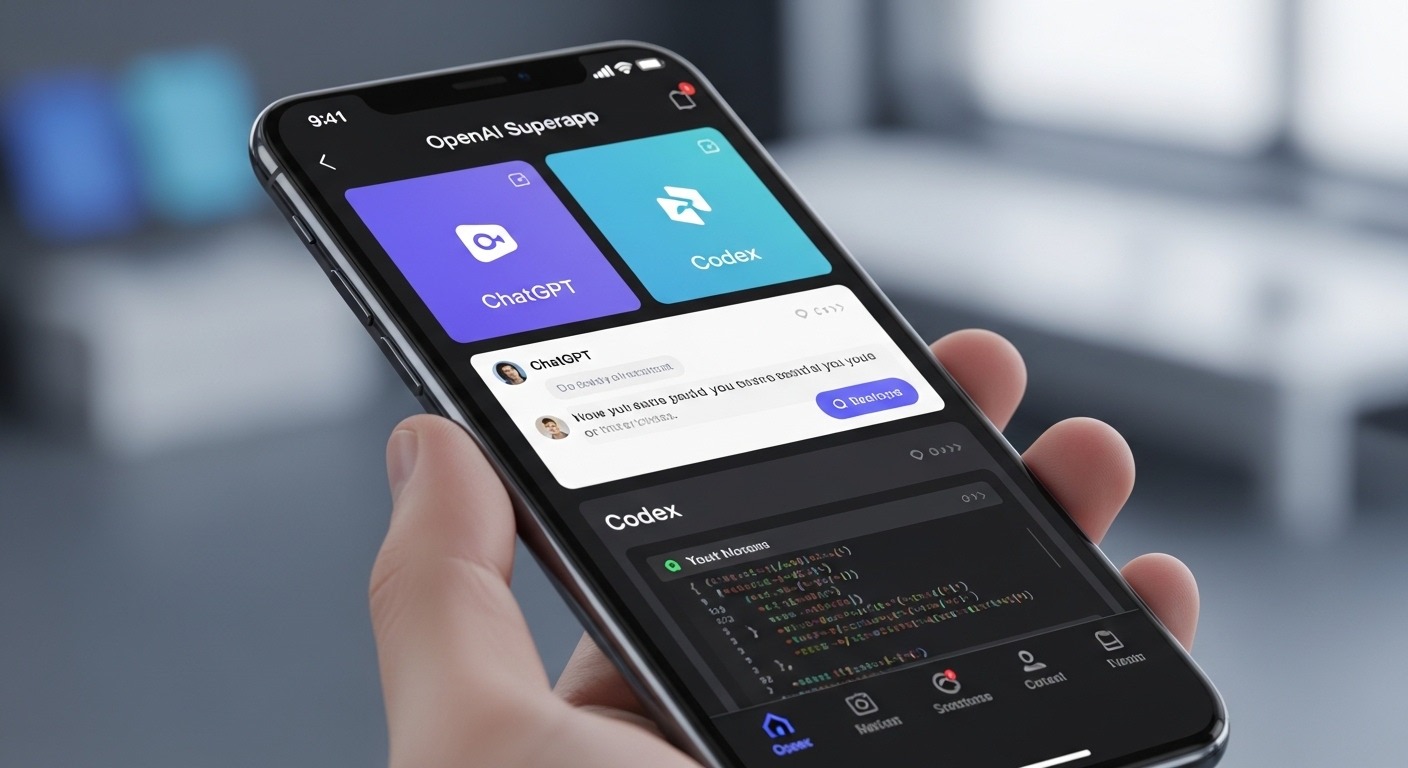
Recent insights from the Wall Street Journal suggest that OpenAI is working toward a unified experience where ChatGPT and Codex are deeply connected. This move signals a clear goal: simplify digital work while making advanced AI tools more accessible to everyday users.
What Is OpenAI’s New Superapp?
OpenAI’s New Superapp combines chat, coding, content creation, and task management into one platform to simplify how people use digital tools. Instead of switching between apps, users can handle everything in one place, saving time and reducing complexity.
In simple terms, it acts as a digital hub where users can interact with AI, create content, write code, and manage tasks more efficiently.
Key Idea Behind the Superapp
The core idea behind OpenAI’s New Superapp is to remove friction and improve productivity by keeping everything in one place, so users do not need to jump between apps or learn different systems. This approach focuses on simplicity, speed, and smarter workflows, allowing users to complete tasks with fewer steps while the AI understands context and provides relevant support. Here is what users can expect:
- All-in-one interface
One platform that combines multiple tools into a single workspace - Smart AI assistance
Context-aware responses that improve with usage - Seamless switching between tasks
Move between writing, coding, and analysis without opening new tools - Real-time execution
Instant results for commands and queries - Context-aware workflows
AI adapts based on user actions and needs - Reduced cognitive load
Using fewer tools helps maintain focus and reduces distractions. - Cross-function integration
Features work together instead of separately - Personalized experience
Learns user behavior to improve output - Scalable usage
Useful for both simple and complex tasks
This approach makes the platform efficient, practical, and easy to use while supporting a wide range of user needs.
Why OpenAI Is Building a Superapp
New Superapp Could Redefine AI Chatbots because user expectations have changed. People now want faster results and fewer steps.
The Wall Street Journal report highlights that OpenAI is aiming to compete with large tech ecosystems that already offer bundled services.
Main Reasons Behind This Move
Before exploring deeper, it is important to understand the main drivers behind this strategy.
- User convenience
People prefer simple and unified tools that reduce the need to switch between multiple apps - Higher engagement
Users spend more time on platforms that offer multiple features in one place - Better personalization
AI learns from user behavior and delivers more accurate and relevant responses over time - Stronger ecosystem control
OpenAI can manage the full user experience instead of relying on external tools - Competitive pressure
Big tech companies are building similar all-in-one platforms, increasing the need to innovate - Faster workflows
Less app switching helps users complete tasks more quickly and efficiently - Improved user retention
A single powerful platform encourages users to return and stay loyal - Cost efficiency
Users can replace multiple paid tools with one solution, saving money - Centralized data management
All files, tasks, and interactions stay organized in one system - Enhanced collaboration
Teams can share, edit, and manage work more easily within the same platform - Continuous product improvement
A unified system allows faster updates and better feature development based on user data
This strategy is about building a long-term relationship with users.
Role of ChatGPT in the Superapp
ChatGPT sits at the center of the New Superapp and acts as the main interface that users rely on to interact with all features. It allows people to communicate with the platform using natural language, which makes the experience simple and intuitive.
Instead of navigating complex menus or learning different tools, users can just type or speak their requests, and the system responds instantly. This approach reduces effort and makes advanced tools feel easy to use, even for beginners.
How ChatGPT Powers the Experience
ChatGPT connects all features within the superapp and works like a smart assistant that understands user intent. It not only responds to questions but also helps complete tasks across different functions, making the entire system feel connected and efficient.
It can:
- Answer questions instantly
Provide clear, accurate, and easy-to-understand responses in real time - Write and edit content
Create blogs, emails, reports, summaries, and improve existing content - Assist with research
Break down complex topics into simple ideas for better understanding - Manage tasks
Help organize daily work, reminders, and workflows - Connect different tools
Act as a bridge between features like writing, coding, and data analysis - Understand context
Remember previous inputs to deliver more relevant and consistent replies - Support decision-making
Offer suggestions based on user goals and inputs - Handle multi-step tasks
Complete complex requests by breaking them into simple steps
This makes the experience feel smooth, natural, and highly interactive for users.
How Codex Integration Changes Everything
Codex plays a major role in OpenAI’s New Superapp by adding powerful coding capabilities to the platform. It allows users to write, understand, and manage code using simple language, which removes the need for deep technical knowledge. This is a major step toward making technology more accessible, as it opens the door for non-developers to create and build digital solutions.
What Codex Can Do Inside the Superapp
Codex helps users turn ideas into working solutions quickly and efficiently. It simplifies complex coding tasks and supports both beginners and experienced developers.
Here are some key capabilities:
- Generate code from simple prompts
Users can describe what they want, and Codex creates the code - Fix bugs quickly
Identify errors and provide clear solutions to correct them - Automate repetitive tasks
Save time by handling routine processes automatically - Build small applications
Create functional tools and apps without starting from scratch - Translate code between languages
Convert code into different programming languages easily - Explain the code clearly
Help users understand how code works step by step - Optimize performance
Suggest improvements to make the code faster and cleaner - Support learning
Act as a guide for users who want to learn coding basics - Enable rapid prototyping
Quickly turn ideas into working models for testing
This lowers the barrier to entry for coding and makes development faster, simpler, and more accessible for everyone.
Features Expected in the Superapp
The Wall Street Journal report suggests that OpenAI is building a feature-rich platform designed to work as one fully connected system, where every tool complements the other. This approach is meant to reduce friction, save time, and offer a seamless experience that can handle personal, professional, and technical tasks in one place.
By combining multiple AI capabilities under a single platform, OpenAI’s superapp aims to create a workspace that is intuitive, versatile, and powerful enough to replace several standalone apps.
Core Features to Watch
These features are designed to work together smoothly, making the platform both practical and efficient for users with different needs:
- Unified chat interface
A single starting point for conversations, queries, and commands, allowing users to interact naturally with AI without navigating multiple menus. - Integrated coding assistant
Powered by Codex, this feature helps users generate, edit, debug, and translate code, making coding accessible to both developers and beginners. - Content creation tools
Users can write, edit, summarize, and refine text content efficiently, whether it’s blogs, reports, or emails, all within the same platform. - Task and workflow automation
Automate repetitive processes, manage to-do lists, and streamline workflows to save time and reduce manual effort. - File upload and analysis
Upload documents, spreadsheets, and datasets to analyze, summarize, or extract actionable insights directly inside the app. - Voice interaction support
Speak instead of typing, allowing hands-free operation, faster commands, and more natural interaction with AI tools. - Custom workflows
Users can create personalized processes for recurring tasks, ensuring the platform adapts to their specific needs. - Third-party integrations
Connect seamlessly with external tools and services to extend functionality and centralize all work in one system. - Multi-device support
Access the superapp from desktops, laptops, tablets, and mobile devices with consistent performance and synchronization. - Real-time collaboration
Teams can work together efficiently, share files, co-edit documents, and communicate in real-time without switching platforms. - AI-powered suggestions
The platform proactively offers recommendations for tasks, content, and code improvements based on context and past usage. - Centralized dashboard
Track all activities, files, workflows, and updates in one view for better organization and control. - Cross-functional linking
Chat, coding, content creation, and data analysis tools are interconnected, allowing outputs from one feature to be used seamlessly in another. - Adaptive interface
The app customizes its layout and tools based on user habits and frequent tasks, improving speed and efficiency.
These features together aim to create a complete digital workspace, combining communication, productivity, coding, and content creation into a single, intuitive, and smart platform that simplifies complex workflows.
How This Superapp Competes With Big Tech
OpenAI’s New Superapp enters a competitive market dominated by large tech companies like Google, Microsoft, and Meta, all of which are investing heavily in AI-driven ecosystems. While the landscape is crowded, OpenAI’s approach stands out because it focuses on combining multiple advanced AI capabilities in one intuitive platform.
The goal is not just to match competitors but to provide a smoother, more human-centered experience that reduces complexity while increasing productivity and creativity.
Competitive Edge of OpenAI
Here are some factors that may help OpenAI stand out in the market:
- Conversation-first design
Users can interact naturally through chat, making AI feel more like a helpful assistant than a tool. - Deep AI integration
AI is not an add-on but a core part of the platform, connecting chat, coding, content creation, and automation seamlessly. - Fast innovation cycle
Frequent updates ensure users have access to the latest features and improvements without delays. - Simple interface
Designed for beginners, it reduces the learning curve and makes advanced features accessible. - Strong developer tools
Codex integration allows developers to write, debug, and optimize code more efficiently, adding real technical value. - Flexible use cases
The superapp works for personal projects, professional workflows, education, and business, offering versatility that standalone tools can’t match. - Cross-platform support
Access from desktop, mobile, and tablet ensures users stay productive anywhere. - Smart AI suggestions
The AI provides context-aware prompts and solutions, helping users accomplish tasks faster.
This combination of human-like interaction, technical depth, and simplicity gives OpenAI a strong position in the AI ecosystem.
Impact on Developers and Creators
OpenAI’s New Superapp offers significant benefits for both developers and content creators by reducing friction, saving time, and making advanced capabilities more accessible.
What Developers Can Expect
- Faster development cycles
Build and test apps quickly without switching between tools. - Reduced debugging time
AI identifies and suggests fixes for errors efficiently. - Better code quality
Suggestions from Codex improve structure, readability, and performance. - Easy prototyping
Quickly turn ideas into working models without extensive setup. - Lower learning curve
Beginners can start coding without prior expertise, accelerating skill development. - Automation support
Developers can automate repetitive tasks and processes using AI-generated scripts. - Code translation
Convert code between languages to increase flexibility and reach.
What Creators Can Expect
- Quick content creation
Write blogs, scripts, marketing copy, and social posts faster. - Improved editing tools
Refine grammar, tone, and structure effortlessly. - Idea generation support
AI provides new angles, topics, and approaches for content. - Time-saving workflows
Focus on creativity while repetitive tasks are handled by AI. - Multi-format content
Generate text, summaries, lists, and structured outputs for different platforms. - Collaboration features
Work with teams in real-time, sharing content and receiving instant feedback. - Consistency across projects
Maintain style and format across multiple pieces of work efficiently.
This combination of features makes the platform valuable for a wide audience, from professional developers to creative writers, enabling both technical and non-technical users to achieve more in less time.
User Experience: Simplicity Over Complexity
OpenAI’s New Superapp focuses heavily on user experience, aiming to make advanced AI tools feel intuitive and easy to use. Instead of overwhelming users with multiple menus and settings, the platform emphasizes clarity, simplicity, and smooth workflows.
Every feature, from chat to coding to content creation, is designed to be accessible while maintaining powerful functionality, ensuring both beginners and experienced users can navigate the system efficiently.
Why This Matters
A simple, well-designed interface leads to better results and encourages consistent use. Benefits include:
- Easy onboarding
New users can start quickly without lengthy tutorials or setup. - Less confusion
Clear menus and intuitive navigation make interactions straightforward. - Higher productivity
Users spend less time learning the platform and more time completing tasks. - Better engagement
Enjoyable, smooth experiences encourage users to stay and explore features. - Reduced learning curve
Minimal training is needed, making advanced tools approachable for everyone. - Consistent workflow
A simple interface ensures users can switch between tasks without disruption. - Contextual assistance
AI prompts and suggestions guide users without interrupting their work. - Fewer errors
Intuitive design reduces mistakes when managing tasks or creating content.
This focus on simplicity over complexity can drive wider adoption and long-term loyalty.
Security and Data Considerations
With more features in one platform, data security is critical. OpenAI’s New Superapp must ensure users trust the system with sensitive content, code, and personal information. A strong security framework is essential for widespread adoption.
Key Areas of Focus
- User data protection
Keep all personal and work-related data safe from breaches. - Privacy controls
Allow users to manage what data is collected and how it is used. - Secure storage systems
Prevent unauthorized access through encryption and secure servers. - Transparent policies
Clearly communicate how user data is handled and shared. - Compliance with regulations
Follow global standards for privacy and security, including GDPR and CCPA. - Regular updates
Fix vulnerabilities quickly and improve system defenses continuously. - Permission-based access
Control which features or team members can view or edit data. - Audit trails
Track actions within the platform to enhance accountability and security.
Trust and transparency will play a major role in the superapp’s success and adoption.
Future of AI Superapps
OpenAI’s New Superapp could shape the future of digital tools by demonstrating the value of an all-in-one, AI-powered platform. If successful, other companies may adopt a similar approach, combining multiple services into a single, connected ecosystem.
What Comes Next
Here are possible future trends inspired by OpenAI’s approach:
- Rise of all-in-one platforms
Fewer standalone apps as users prefer connected ecosystems. - Smarter automation tools
AI handles more tasks automatically, reducing manual work. - Better personalization
Tools adapt to user behavior, preferences, and workflow patterns. - Stronger AI ecosystems
Multiple services integrated into one system, improving efficiency. - Increased reliance on AI
Daily tasks, research, and creation are increasingly managed by AI assistance. - New business models
Subscription-based or tiered ecosystems that bundle AI features and productivity tools. - Collaborative AI environments
Teams can work simultaneously in AI-powered spaces, sharing tasks and insights. - Adaptive learning systems
AI learns from usage trends and improves recommendations over time. - Cross-industry applications
Superapps could extend to education, healthcare, finance, and enterprise solutions.
This shift could fundamentally redefine how people interact with technology, moving toward platforms that are intelligent, connected, and personalized.
Challenges OpenAI May Face
Despite its strong potential, OpenAI’s New Superapp will face several challenges that could impact adoption, performance, and long-term success. Balancing innovation with usability, privacy, and market competition will be critical as the platform grows. Understanding these risks helps users, developers, and businesses anticipate how the superapp might evolve.
Possible Risks
Here are key challenges OpenAI must navigate:
- High competition
Tech giants like Google, Microsoft, and Meta have vast resources, large user bases, and established ecosystems, making it harder for OpenAI to capture market share. - Privacy concerns
Users may be cautious about sharing sensitive data, especially when multiple features like coding, content creation, and file handling are integrated. - Performance issues
Running a feature-rich superapp at scale requires robust infrastructure; slow performance could frustrate users. - Feature overload
Too many tools in one platform can overwhelm users, reducing engagement instead of improving productivity. - User trust
Maintaining confidence is essential; any perceived misuse of data or AI errors could harm reputation. - Regulatory pressure
Governments may introduce rules on AI usage, data privacy, and security that could affect functionality and adoption. - Integration challenges
Ensuring smooth operation across multiple AI tools, third-party apps, and devices can be complex. - Adoption resistance
Users accustomed to separate apps may hesitate to switch to a single platform despite its advantages.
Handling these challenges effectively will determine how widely the superapp is adopted and how competitive it remains.
SEO and Business Implications
OpenAI’s New Superapp also has significant implications for businesses, marketers, and content creators. By integrating AI into chat, coding, content creation, and workflow automation, it changes how information is generated, shared, and discovered online.
What Marketers Should Watch
Here are some key areas where the superapp could impact digital marketing:
- Shift in search behavior
Users may increasingly rely on AI responses instead of traditional search, affecting traffic patterns. - Content optimization changes
Creating AI-friendly, structured, and high-value content will become more important for visibility. - Faster content production
AI tools can speed up writing, editing, and idea generation, allowing marketers to produce more content in less time. - New traffic sources
AI-powered platforms may become significant channels for user engagement and discovery. - Personalized marketing
AI can help deliver targeted messaging based on user behavior, preferences, and interactions. - Voice and chat search growth
Conversational AI queries may increase, requiring content optimized for natural language questions. - Data-driven insights
Businesses can analyze AI interactions to understand customer needs and improve offerings. - Automation of repetitive marketing tasks
Campaign management, social media updates, and email responses can be handled more efficiently.
Businesses that adapt early and leverage these AI-powered capabilities may gain a strong competitive advantage, while those slow to adjust could risk falling behind in a rapidly evolving digital landscape.
Final Thoughts
OpenAI’s New Superapp reflects a major shift toward unified digital tools. By combining chat and coding, OpenAI is building a platform that is both powerful and easy to use. If executed well, OpenAI’s New Superapp could reshape how people work, create, and solve problems daily. It is not just about technology, but about making complex tasks simple for everyone.




.svg)
.svg)
.svg)
.svg)