Component-driven layouts are becoming a major part of modern website development in 2026. Businesses now need websites that scale easily, load quickly, and support consistent user experiences across multiple pages and devices. Because of this demand, developers are moving toward reusable frontend systems that simplify design updates and improve development speed.
At the same time, managing large websites has become more challenging. Traditional frontend structures often create repeated code, inconsistent layouts, and difficult maintenance processes. Modern component-based systems solve these issues by organizing websites into reusable sections that improve efficiency, consistency, and long-term scalability for growing digital platforms.
Why Component-Driven Layouts Matter in Modern Development
Modern websites often contain hundreds of pages, interactive sections, forms, and navigation systems. Managing these elements separately can slow development and increase technical mistakes over time.
This is why Component-Driven Layouts are becoming essential for frontend development teams. Instead of rebuilding the same design elements repeatedly, developers create reusable components that work across multiple pages and platforms.
Before businesses adopt component-based systems, they often focus on several important benefits.
- Reusable design elements improve development speed.
- Consistent page structure supports better branding.
- Simplified frontend updates reduce maintenance effort.
- Scalable website systems support future growth.
These improvements help businesses build websites more efficiently while maintaining cleaner frontend organization.
How Component-Driven Layouts Improve Frontend Efficiency
Traditional website structures often require developers to duplicate code across multiple sections. This increases workload and creates more opportunities for design inconsistencies.
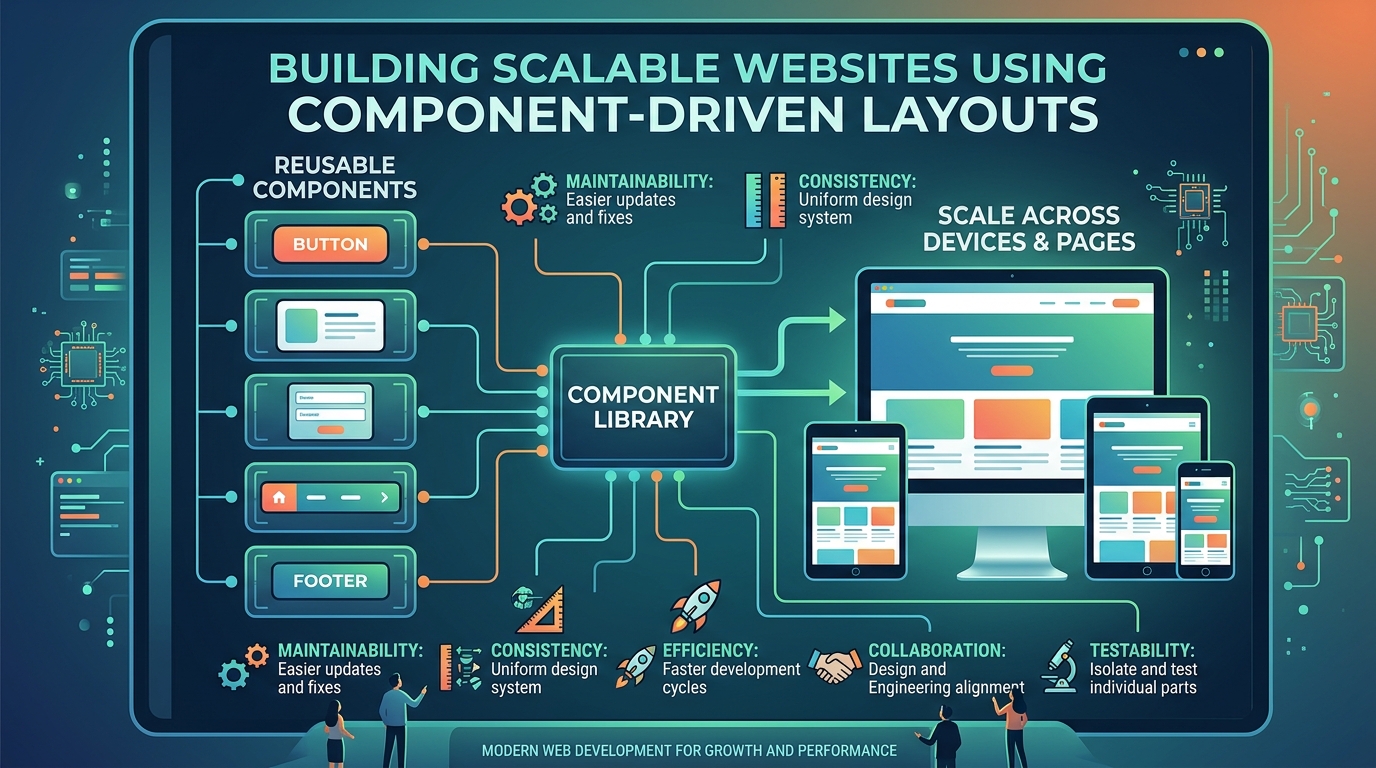
However, Component Driven Layouts allow developers to build reusable interface blocks such as buttons, menus, cards, forms, and banners. Once created, these components can appear throughout the website without rebuilding them manually.
Faster Website Development
Reusable components reduce repeated coding work and help developers complete projects faster.
Easier Maintenance Process
When developers update one component, changes automatically appear across all connected pages.
Improved Design Consistency
Reusable structures help businesses maintain consistent branding and user experience throughout websites.
These advantages make component-based systems highly valuable for growing digital platforms.
Why Component-Driven Layouts Support Scalability
Scalability is important for businesses planning long-term website growth. As websites expand, frontend systems must support new pages, features, and content without becoming difficult to manage.
Component-driven layouts improve scalability because reusable components simplify expansion and reduce development complexity. Teams can add new sections quickly without redesigning entire layouts.
Several important scalability improvements come from component-based development.
- Modular frontend systems support flexible expansion.
- Reusable content blocks improve workflow efficiency.
- An organized project structure reduces coding confusion.
- Faster feature deployment improves adaptability.
These improvements help businesses respond more quickly to changing customer and market demands.
The SEO Benefits of Component-Driven Layouts
Search engines reward websites that provide fast loading times, organized structures, and positive user experiences. This makes frontend organization an important part of technical SEO performance. Businesses using Component-Driven Layouts often create cleaner code structures that support better search engine crawling and improved website speed.
Improved Page Speed
Reusable components reduce unnecessary code duplication and improve loading efficiency.
Better Mobile Responsiveness
Component-based systems adapt more smoothly across smartphones, tablets, and desktop devices.
Cleaner Technical Structure
Organized frontend layouts help search engines understand page content more effectively.
These advantages can improve both user engagement and search visibility over time.
How Component-Driven Layouts Improve Team Collaboration
Large web projects usually involve designers, developers, content managers, and testing teams. Without proper organization, communication problems may slow project delivery.
This is another reason businesses are adopting Component-Driven Layouts. Shared frontend systems create a more organized workflow that helps teams work together efficiently.
Before improving collaboration, businesses often focus on several workflow improvements.
- Shared design libraries improve team coordination.
- Standardized frontend systems reduce project confusion.
- Clear component documentation supports faster onboarding.
- Simplified testing workflows improve quality control.
These improvements help teams deliver projects more smoothly while reducing development delays.
Security and Stability Benefits of Component-Based Systems
Website security and stability remain important for modern businesses. Frontend systems must support smooth performance while reducing technical risks and unexpected errors. Component-based development often improves stability because reusable structures are easier to test, monitor, and maintain.
Reduced Coding Errors
Reusable components lower the chances of repeated frontend mistakes across websites.
Simplified Performance Testing
Developers can test individual components separately before deployment.
Improved System Stability
Consistent frontend structures create more reliable user experiences across devices. Because stable websites improve customer trust, businesses increasingly value organized frontend systems.
Common Challenges Businesses Should Prepare For
Although Component Driven Layouts offer many advantages, businesses should still prepare for some implementation challenges. Teams may need time to reorganize workflows and learn new frontend structures properly.
Without clear planning, projects can become disorganized during migration from traditional systems. However, these challenges usually become manageable with proper documentation and experienced development practices.
Several common challenges appear during component-based adoption.
- Initial system planning requires careful organization.
- Frontend library management needs ongoing maintenance.
- Team training processes may slow early progress.
- Component version control requires structured workflows.
Understanding these challenges early helps businesses build stronger development strategies.
Future Trends in Component-Based Web Development
Frontend development will continue focusing on scalability, automation, and reusable systems over the next few years. Businesses want websites that support rapid updates without increasing maintenance complexity.
As digital experiences continue evolving, Component-Driven Layouts are expected to become a core frontend development strategy across multiple industries.
AI-Assisted Component Creation
Artificial intelligence tools may soon generate reusable frontend components automatically.
Cross-Platform Design Systems
Businesses will increasingly use shared component libraries across websites, apps, and digital products.
Cloud-Based Frontend Collaboration
Cloud-powered design systems will improve remote teamwork and frontend synchronization. These trends show how reusable frontend systems will continue shaping modern web development.
Final Thoughts
Component-driven layouts help businesses create scalable, organized, and efficient websites for modern digital experiences. By using reusable frontend systems, developers can improve consistency, simplify maintenance, and speed up project delivery without reducing quality.
As websites continue growing in complexity, businesses using Component-Driven Layouts may achieve better SEO performance, stronger scalability, and smoother collaboration across development teams. Flexible frontend systems will remain an important part of modern web design and long-term digital growth.





.svg)
.svg)
.svg)
.svg)