API-First Architectures are changing how modern websites and digital platforms are built in 2026. Businesses now want websites that load quickly, support multiple devices, and allow teams to update content without slowing development. Because of this shift, developers are moving away from traditional website structures and choosing flexible headless systems powered by connected APIs.
At the same time, customers continue demanding higher standards and better experiences. Users expect smooth browsing experiences across mobile apps, websites, smart devices, and online stores. Modern businesses need systems that can scale easily while keeping websites secure and fast. This is why headless development and API-focused design are becoming a strong foundation for future-ready websites.
Why API-First Architectures Matter for Modern Websites
Traditional website systems often connect the frontend and backend tightly together. While this worked for older websites, it creates limitations for modern businesses that need flexibility and faster updates.
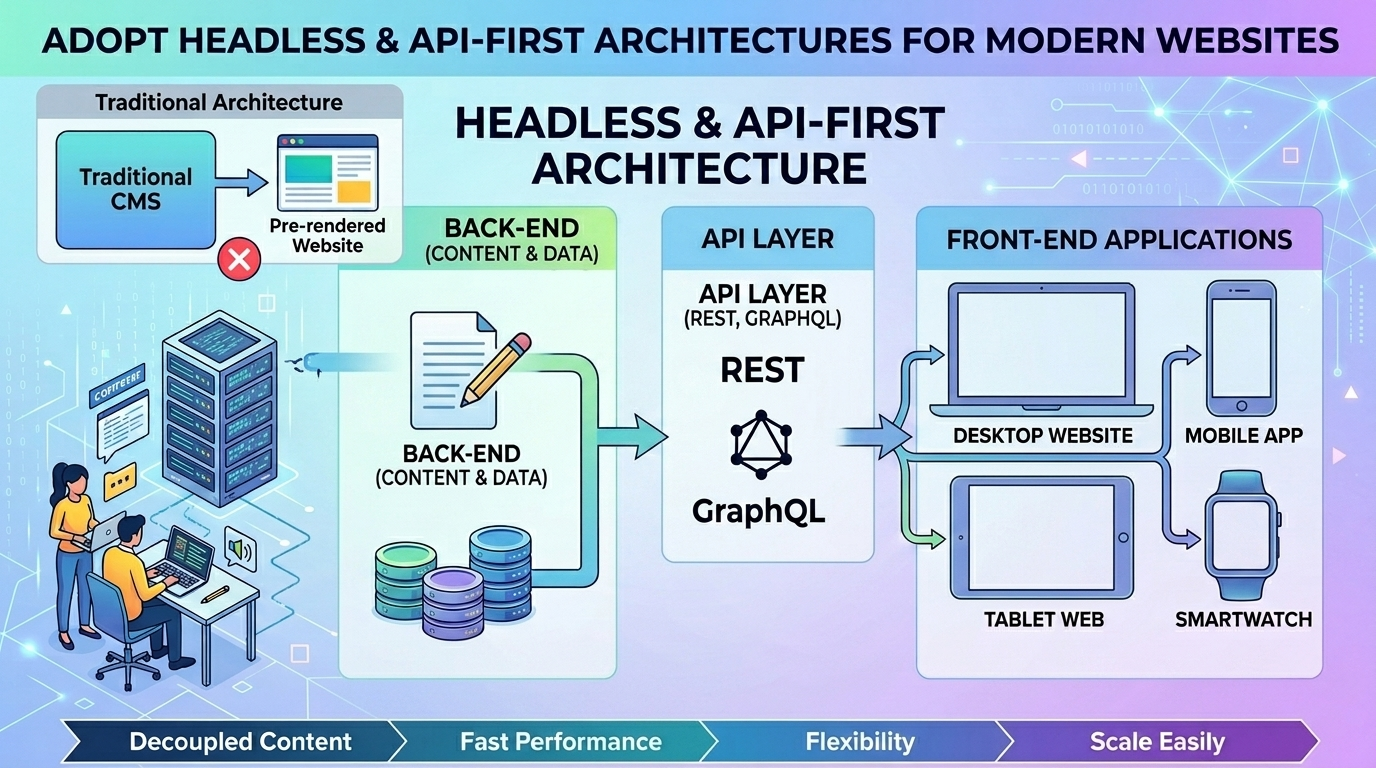
API-First Architectures solve this problem by separating content management from the presentation layer. Developers can manage data through APIs while designing frontend experiences independently. This creates better speed, scalability, and design freedom.
Before businesses adopt modern architectures, they usually focus on several key advantages.
- Flexible content delivery improves user reach.
- Faster website updates reduce development delays.
- Independent frontend systems support design freedom.
- Scalable digital platforms improve future growth.
These benefits help businesses create smoother experiences for users across different platforms and devices.
How Headless Architecture Changes Web Development
Headless architecture removes the direct connection between the frontend and backend. Instead of relying on one fixed system, developers can use APIs to send content wherever needed.
This approach gives businesses more control over website experiences. Teams can redesign interfaces, launch mobile apps, or add new digital channels without rebuilding the entire backend system.
Better Frontend Freedom
Design teams can build customized user experiences freely without depending heavily on backend limitations. This improves creativity and supports faster design updates.
Simpler Backend Management
Developers can manage content and data separately, making maintenance easier and reducing technical complexity.
Multi-Platform Content Delivery
Content can appear on websites, apps, smart TVs, and other devices through connected APIs.
Because of this flexibility, many growing companies now prefer headless systems for long-term scalability.
Why API-First Architectures Improve Website Performance
Website speed plays a major role in SEO rankings and user satisfaction. Pages that load slowly can drive visitors away and lower conversion opportunities. Businesses, therefore, need systems that deliver content efficiently.
API-First Architectures improve performance by allowing lightweight frontend frameworks to request only the data they need. This reduces unnecessary page loading and improves response speed.
Several technical improvements support better website performance.
- Faster content requests improve loading speed.
- Reduced server pressure improves stability.
- Optimized mobile experiences support engagement.
- Efficient data handling improves responsiveness.
These improvements help websites perform smoothly even during high traffic periods.
The SEO Benefits of API-First Architectures
Search engines reward websites that provide better user experiences, fast performance, and mobile-friendly design. This is one reason businesses are increasingly investing in API-First Architectures.
Modern headless systems support cleaner coding structures and faster content delivery. As a result, websites often achieve stronger technical SEO performance and better indexing efficiency.
Improved Page Speed
Search engines prioritize websites that load quickly because users prefer fast browsing experiences.
Better Mobile Performance
Headless systems support responsive designs that work smoothly across smartphones and tablets.
Cleaner Website Structure
Modern frameworks often create organized code that helps search engines crawl pages more effectively.
These advantages can improve both visibility and engagement metrics over time.
How API-First Architectures Support Business Growth
Businesses today need websites that can grow with changing customer demands. Traditional systems sometimes struggle when companies expand services or launch new digital products.
However, API-First Architectures allow businesses to scale more efficiently because frontend and backend systems operate independently. This flexibility supports faster growth and smoother updates.
Before expanding digital platforms, businesses often focus on several important goals.
- Quick feature releases improve customer satisfaction.
- Flexible platform scaling supports business growth.
- Cross-device consistency improves user experience.
- Simple third-party integrations expand platform capabilities.
These advantages help businesses respond quickly to market changes and customer expectations.
Security Advantages of Headless Systems
Security remains a major concern for modern websites. Businesses must protect user data while preventing cyber threats and platform vulnerabilities.
Headless systems often improve security because the frontend and backend operate separately. This reduces direct exposure between systems and limits attack opportunities.
Separated System Layers
Decoupled systems reduce the risk of widespread failures during security incidents.
Controlled API Access
Developers can manage access permissions more carefully through secure API settings.
Regular Security Updates
Independent services allow faster updates without disrupting the entire website.
Because online security threats continue evolving, businesses increasingly value flexible and secure website structures.
Common Challenges Businesses Should Prepare For
Although API-First Architectures offer many advantages, businesses should still prepare for implementation challenges. Planning and team coordination remain important during the transition process.
Without proper planning, businesses may face integration delays or workflow confusion. However, these challenges are usually manageable with experienced developers and clear project goals.
Several common challenges appear during migration projects.
- Initial setup planning requires careful coordination.
- API management systems need ongoing monitoring.
- Frontend integration work may increase complexity.
- Developer skill requirements affect implementation speed.
Understanding these challenges early helps businesses build stronger transition strategies.
Future Trends in API-First Website Development
The future of web development will focus heavily on flexibility, personalization, and connected digital experiences. Businesses want websites that can support new technologies without major rebuilding costs.
Because of this demand, API-First Architectures will likely continue growing across eCommerce, media, healthcare, finance, and SaaS industries.
AI-Powered User Experiences
Artificial intelligence tools will increasingly personalize content delivery and customer interactions.
Voice and Smart Devices
More websites will deliver content through voice assistants and connected devices.
Cloud-Based Scalability
Cloud-native systems will help businesses expand digital platforms faster and more efficiently.
These trends show why flexible architecture is becoming essential for modern digital success.
Final Thoughts
API-First Architectures help businesses create faster, more scalable, and more flexible websites for modern users. By separating frontend and backend systems, companies can improve performance, simplify updates, and support multiple digital platforms more efficiently.
As customer expectations continue evolving, businesses that invest in API-First Architectures may achieve stronger SEO performance, better user engagement, and improved long-term scalability. Modern web development now depends heavily on flexibility, speed, and connected digital experiences that support future growth.





.svg)
.svg)
.svg)
.svg)