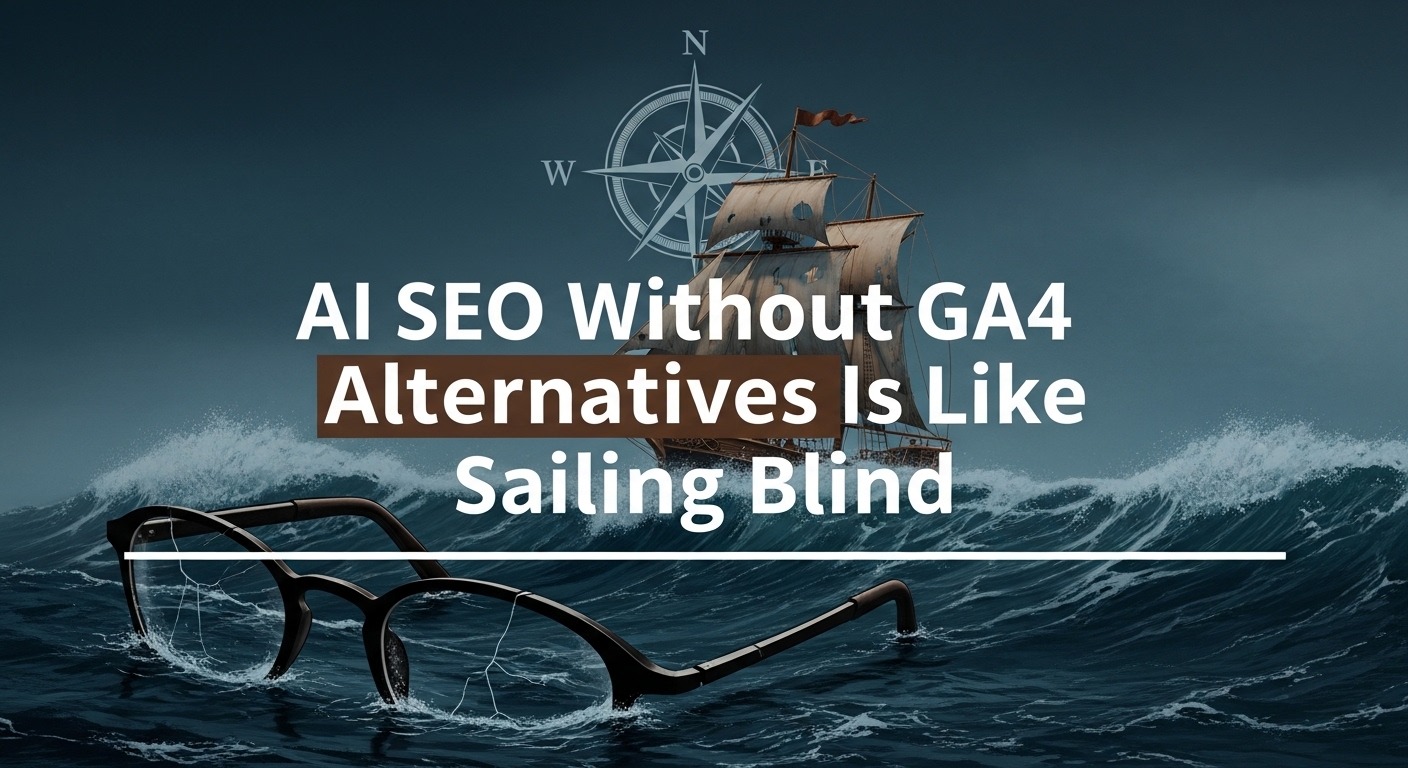
AI SEO is reshaping how websites grow and compete in search results. It promises speed, scale, and smarter decisions. But when this approach runs without clear tracking, progress becomes uncertain. Many site owners rely on automation while losing sight of real user behavior. That gap creates confusion and weak outcomes.
Strong growth depends on visibility. When data is unclear, even good content loses direction. Our guide will explain why analytics matter, how GA4 alternatives support better decision-making, and how insights keep growth steady rather than random.
Why Clear Insight Matters for Search Growth
Search engines reward pages that genuinely help users. They do not rank pages based on promises or tools used behind the scenes. Instead, they watch how people behave. AI SEO performs best when decisions follow real actions, not assumptions or trends.
Clear insight shows how users experience a page from start to finish. It helps teams understand what works and what quietly fails. Without that view, optimization becomes guesswork rather than improvement.
Clear insight allows teams to:
- See which pages solve real problems
Pages that hold attention usually answer the right questions. - Identify content that confuses readers
Sudden exits often point to unclear or missing information. - Understand what earns trust over time
Repeat visits show confidence, not chance. - Measure engagement beyond clicks
Reading, scrolling, and time spent matter more than visits alone. - Prioritize updates with purpose
Teams fix what users struggle with instead of rewriting everything.
Without this clarity, optimization turns into repetition. Pages get updated again and again without understanding why results improve, drop, or stay flat. Growth slows because effort lacks direction.
What Happens When SEO Runs Without Direction
Direction comes from feedback. When feedback disappears, mistakes repeat. Automation alone cannot correct itself. AI SEO depends on signals to learn and adjust. Without them, progress stalls.
When teams work without insight, decisions feel uncertain. Updates happen because something feels wrong, not because evidence points to a clear issue.
When insight is missing:
- Content updates feel random
Changes are made without knowing which part failed. - Rankings fluctuate without explanation
Drops feel sudden because the causes stay hidden. - High-performing pages get over-edited
Strong content gets weakened by unnecessary changes. - Low-impact tasks take priority
Time is spent fixing pages that do not matter. - Teams lose confidence in strategy
Unclear results lead to second-guessing every decision.
Clear data turns effort into progress. It shows where to focus, where to pause, and where no action is needed. This stability allows AI SEO systems to improve instead of resetting.
Where GA4 Falls Short for Practical SEO
GA4 records actions but rarely explains intent. Many reports feel abstract and disconnected from daily work. For AI SEO, this creates blind spots that make decisions harder, not easier. Teams often know something changed but cannot see why. The data exists, but it lacks clarity and context.
Common challenges include:
- Hard-to-follow event tracking
Events show actions but hide the reason behind them. - Limited page-level understanding
It is difficult to see how individual pages perform in full. - Confusing navigation paths
User journeys feel fragmented and unclear. - Overloaded dashboards
Too many options hide the signals that matter. - Weak connection to content decisions
Reports do not clearly show what to improve or remove.
When reports are unclear, teams delay action or rely on assumptions rather than facts. This slows improvement and weakens trust in both data and strategy. For AI SEO, clarity matters more than volume.
Why GA4 Alternatives Support Better Decisions
Better tools explain behavior in plain terms instead of hiding meaning behind complex reports. AI SEO improves when teams can quickly see what users do and why it matters. When insight is clear, decisions become faster and more accurate.
GA4 alternatives focus on understanding rather than tracking everything. They show patterns that guide action instead of flooding teams with raw data.
GA4 alternatives often provide:
- Clear page engagement summaries – show which pages hold attention and which fail
- Simple user journey views – reveal how visitors move from page to page
- Reading and scrolling focus – highlight whether content is actually consumed
- Page exit clarity – show where users decide to leave
- Comparison views – help teams spot changes before rankings drop
These tools reduce noise and surface signals that matter. Growth improves when teams spend time fixing real problems instead of decoding reports.
Key Signals That Guide Smarter Optimization
Not every metric deserves attention. AI SEO performs best when teams focus on signals that reflect intent, clarity, and satisfaction. These signals show how content helps or fails users.
Important signals include:
- Time spent reading content – indicates whether users find value
- Scroll depth across pages – shows if the content structure supports reading
- Exit points and drop-offs – reveal confusion or unmet expectations
- Repeat visits – suggest trust and relevance
- Entry page performance – shows first impressions
- Navigation behavior – indicates whether internal links help users
Each signal tells a small part of the story. Together, they explain whether the content matches user needs or needs improvement.
How User Behavior Shapes Rankings
Search engines observe reactions, not promises. AI SEO aligns content with these reactions by studying how people engage with pages over time. Behavior shows whether content earns attention or gets ignored.
Behavior insights help teams:
- Adjust content depth – shorten pages that overwhelm or expand thin sections
- Improve clarity in weak sections – rewrite confusing parts
- Strengthen internal linking – guide readers to relevant follow-ups
- Fix misleading headlines – align titles with content intent
- Improve layout flow – make reading easier
When users stay longer, read more, and interact naturally, rankings improve as a result of satisfaction, not tricks.
Why Privacy-First Analytics Matter
Trust shapes engagement. Users avoid sites that feel invasive or confusing. AI SEO benefits from analytics tools that respect privacy while still offering clear insight into behavior.
Privacy-first tools help by:
- Reducing banner fatigue – fewer interruptions improve reading
- Building user confidence – visitors feel respected
- Supporting long-term compliance – fewer legal risks
- Improving data accuracy – users interact more freely
- Encouraging return visits – trust leads to loyalty
When users feel safe, they stay longer, engage more deeply, and return more often. That behavior sends strong quality signals to search engines.
Replacing Guesswork With Evidence
Many SEO choices rely on assumptions and trends. AI SEO removes uncertainty by learning from real actions instead of opinions. Evidence replaces debate.
Evidence-based insight allows teams to:
- Fix pages that confuse readers – based on exits and scroll stops
- Protect content that performs well – avoid harmful over-editing
- Plan updates with purpose – focus on what matters
- Stop wasting effort – drop low-impact changes
- Measure improvement clearly – track before-and-after results
This approach saves time, reduces frustration, and creates steady progress instead of constant rework.
How Content Quality Improves With Insight
Quality content does one thing well: it answers real questions without wasting time. AI SEO becomes far more accurate when insight shows how readers actually behave on a page. Instead of guessing what users want, teams see where content helps and where it fails.
Insight turns content improvement into a clear process rather than repeated rewrites. It highlights weak spots that rankings alone cannot explain.
Insight helps teams:
- Spot unclear explanations
Pages with fast exits often confuse readers. Insight shows which sections cause people to leave. - Identify missing details
Scroll data reveals where users stop reading, signaling gaps or unanswered questions. - Improve structure and flow
Behavior patterns show whether headings guide readers or slow them down. - Reduce unnecessary content
Low-engagement sections can be shortened or removed to improve clarity. - Strengthen useful sections
High-engagement areas can be expanded to increase value. - Match content to intent
Insight confirms whether a page meets the reason users searched in the first place.
Over time, content becomes clearer, more focused, and easier to trust. Search engines reward this consistency with stronger and more stable rankings.
Choosing the Right Analytics Tool
No single analytics tool works for every website. AI SEO performs best when tools fit the site’s size, audience, and goals. A good tool should explain behavior clearly, not overwhelm teams with charts and labels.
The right choice simplifies decisions instead of slowing them down. It helps teams act with confidence rather than hesitation.
When choosing a tool, look for:
- Easy setup without long learning curves
Teams should start seeing insight within hours, not weeks. - Clear reports anyone can read
Data should explain what happened and why, not just show numbers. - Honest data collection methods
Tools should avoid hidden tracking and respect user privacy. - Page-level clarity
Reports should explain how individual pages perform, not just site totals. - Behavior-focused insights
Reading time, scroll depth, and exits matter more than raw clicks. - Consistency across reports
Numbers should match across views so teams trust the data.
The right tool removes confusion. It supports confident decisions and long-term planning instead of constant second-guessing.
How Teams Plan Better With Clear Data
Planning fails when based on assumptions. AI SEO supports smarter planning by showing what truly works and what does not. Clear data replaces opinion with evidence, making strategy more stable.
When teams understand performance clearly, they stop reacting to short-term changes and start building steady growth.
Clear data allows teams to:
- Focus on high-impact pages
Insight shows which pages drive value and deserve attention first. - Avoid over-optimization
Teams stop changing pages that already work well. - Align content with real intent
Planning shifts toward solving user problems instead of chasing keywords. - Set realistic goals
Performance trends help teams plan growth without risky expectations. - Reduce wasted effort
Low-impact tasks are identified and removed from plans. - Track progress with confidence
Teams measure improvement based on behavior, not guesswork.
This approach leads to steady improvement instead of sudden drops. Planning becomes calmer, clearer, and far more effective over time.
Supporting Google E-E-A-T Standards
Search engines reward content that shows real experience and earns trust over time. Strong pages feel written by people who understand the topic and the reader’s problem. This approach helps search systems judge quality more accurately and reduce low-value results.
Clear insight supports these standards by keeping content honest, relevant, and current. It encourages steady improvement instead of one-time publishing. Pages that stay accurate signal care and responsibility, which modern ranking systems value.
It helps by:
- Encouraging regular updates
Content stays fresh when teams know which pages still attract attention and which ones need improvement. - Highlighting outdated sections
Old facts, broken references, or unclear advice become easy to spot and fix before they harm trust. - Aligning content with user needs
Real behavior shows what readers expect, helping writers explain topics more clearly and directly. - Reducing unnecessary content
Pages stay focused when teams remove sections that add no value or confuse readers. - Supporting author credibility
Accurate updates and helpful structure signal real knowledge, not recycled information. - Improving consistency across pages
Similar topics stay aligned in tone, depth, and clarity, which strengthens overall site trust.
This matches how modern algorithms evaluate quality by looking at usefulness, clarity, and reliability instead of surface signals.
Mistakes That Limit Long-Term Growth
Automation saves time, but it cannot replace judgment. Growth slows when teams rely on systems without checking context. Long-term success depends on thoughtful decisions backed by real understanding.
Many sites struggle not because tools fail, but because strategy lacks direction. When context is ignored, small issues turn into lasting problems.
Common mistakes include:
- Chasing keywords without purpose
Ranking terms mean little if the content does not answer real questions or solve real problems. - Publishing thin or repeated content
Pages that say the same thing in different words add noise instead of value. - Ignoring reader feedback
Comments, exits, and engagement patterns reveal confusion that teams often overlook. - Updating content without clear goals
Random edits rarely improve results and can weaken strong pages. - Over-optimizing small details
Obsessing over minor changes distracts from improving clarity and usefulness. - Relying on automation alone
Systems need human review to stay accurate, fair, and relevant.
Avoiding these issues protects rankings, builds credibility, and supports steady growth instead of short-term gains.
Final Thoughts
AI SEO works best when it follows clear insight instead of assumptions. Automation helps speed up tasks, but it cannot understand people on its own. Reliable analytics turn real behavior into clear direction. This helps teams know what to improve, what to protect, and where effort truly matters.
When blind spots are replaced with clarity, growth becomes steady and predictable. AI SEO succeeds when technology supports thoughtful decisions, keeps content useful, and helps teams stay focused on real user needs rather than shortcuts.
Frequently Asked Questions (FAQs)
What makes AI SEO effective for long-term rankings?
AI SEO works well when it follows real user behavior. Clear insight helps teams improve content quality, structure, and relevance. Search engines reward pages that users trust and engage with consistently.
Can AI SEO work without analytics tools?
AI SEO can function, but results stay limited. Without analytics, systems lack feedback. This leads to guesswork instead of improvement, which slows growth and weakens rankings.
Why are GA4 alternatives better for AI SEO planning?
GA4 alternatives focus on clarity. They show how users read, scroll, and leave pages. This helps AI SEO systems learn faster and make better decisions.
Does AI SEO support Google’s latest core updates?
Yes. AI SEO aligns with updates that prioritize helpful content, trust, and real experience. When guided by behavior, it supports long-term visibility instead of shortcuts.
Is AI SEO suitable for small websites?
Absolutely. AI SEO helps small sites focus on what matters most. Clear insight allows limited teams to compete by improving quality instead of chasing volume.
How often should AI SEO strategies be reviewed?
Regular reviews work best. AI SEO improves when teams check behavior trends monthly and adjust content gradually based on real data.



.svg)
.svg)
.svg)
.svg)