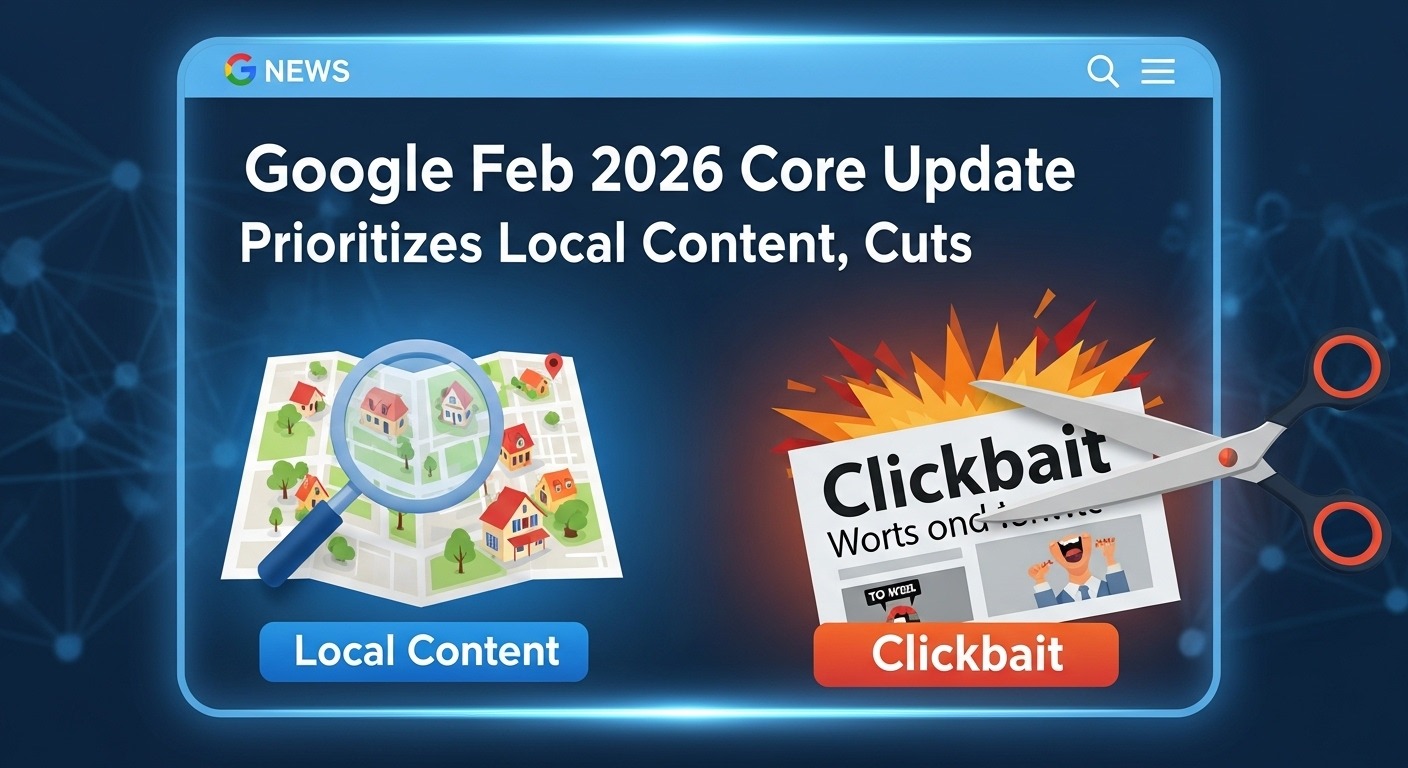
Google Core Update signals how Google decides which pages deserve attention. The February 2026 update makes the direction clear. Google now rewards content that serves real people in real places. Pages built only to attract clicks without helping users are losing visibility.
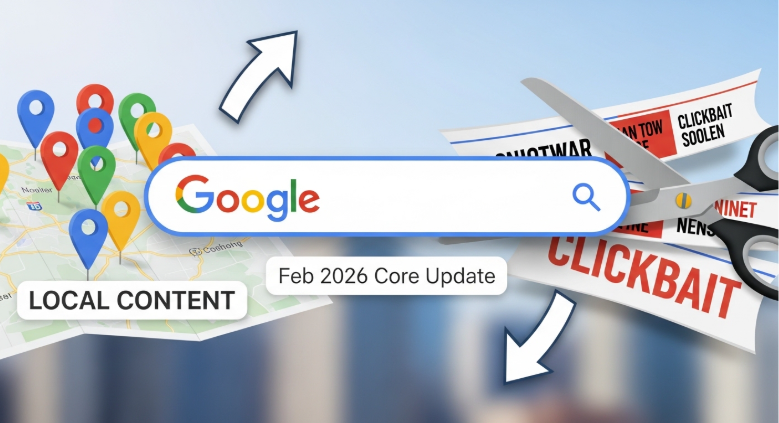
This change affects publishers, businesses, and creators across all industries. Content that shows real experience, honest intent, and local relevance now performs better. Understanding how this update works helps protect rankings and build content that lasts.
What the Google Core Update Means in February 2026
The Google Core Update released in February 2026 improves how Google measures content quality across Search and Discover. It does not penalize individual sites. Instead, it refines ranking systems so that pages that genuinely help users rise over time.
Google also confirmed stronger alignment between Search and Discover. Pages that satisfy users in search results now have a higher chance of appearing in Discover feeds. Pages that frustrate users lose visibility in both areas.
This update focuses on:
- User satisfaction with engagement tricks
Google now values whether users feel helped, not just whether they click or scroll. - Clear intent behind content
Pages must show a clear purpose, such as answering a question or guiding a decision. - Honest alignment between titles and page value
Titles must reflect what the page truly delivers, not exaggerate outcomes. - Stronger evaluation of real experience
Content written from direct knowledge performs better than summaries. - Consistency across Search and Discover
Pages that fail in Search are unlikely to perform in Discover. - Reduced visibility for recycled content
Rewritten or lightly edited pages add little value and rank lower. - Better detection of shallow updates
Small edits made only to appear fresh no longer help rankings.
Google’s goal remains unchanged. Show users content they can trust, understand, and use.
Why Local Content Now Ranks Higher
Local content helps users solve nearby problems. Google treats this as a strong value.
Many users search with local intent even when they do not mention a city. Google now reads location signals more carefully and rewards pages that clearly match those needs.
The Google Core Update favors local content that:
- Mentions real places naturally
Cities, neighborhoods, and regions appear where relevant, not forced. - Explains services clearly
Users understand what is offered and how it works locally. - Reflects local rules or conditions
Content shows awareness of regional differences, policies, or needs. - Shows first-hand familiarity
Details suggest real experience, not copied descriptions. - Answers location-specific questions
Pages respond to what people actually ask in that area. - Avoids generic wording reused across cities
Each location page must feel unique and useful.
Pages copied across cities without real changes no longer perform well. Unique local insight now matters more than scale.
How Clickbait Lost Power After the Update
Clickbait creates false expectations. Google now detects this more accurately.
When users click a result and leave quickly, it signals disappointment. The Google Core Update uses this behavior to reduce visibility for pages that promise more than they deliver.
This update lowers rankings for pages that:
- Use dramatic claims without proof
- Hide key information behind vague language
- Stretch simple ideas into long pages
- Focus on clicks instead of clarity
Short-term attention no longer leads to long-term rankings.
Google Core Update and Headline Quality
Headlines still influence clicks, but accuracy now matters more than excitement.
Google compares the promise of a headline with the value of the content. When the two do not match, trust drops.
Strong headlines now:
- Match the content honestly
Readers get exactly what the title suggests. - Use clear, simple language
No tricks, no confusion, no exaggeration. - Avoid extreme or emotional claims
Calm clarity performs better than hype. - Set realistic expectations
Users know what they will learn before clicking.
Misleading headlines may attract clicks once, but they harm rankings over time and weaken trust signals.
Content Signals That Matter More Now
Google evaluates how well a page helps users complete a task. This update strengthens that evaluation.
Before listing signals, it is important to understand one thing. Google does not reward length alone. It rewards clarity and usefulness.
The Google Core Update prioritizes pages that show:
- Clear answers near the top
Users should find the main answer quickly without scrolling too much. - Simple explanations
Content should explain ideas in plain words that anyone can understand. - Logical flow between sections
Each section should naturally lead to the next without confusion. - Helpful examples
Real examples help users apply what they read. - Strong topic focus
Pages should stay on one clear topic instead of mixing ideas. - Clear intent match
The content should match what users are actually searching for. - Useful subheadings
Headings should describe what users will learn, not tease them. - Easy scanning structure
Short paragraphs and clean spacing help users read faster. - Actionable guidance
Users should know what to do next after reading.
Good structure helps users scan, understand, and act faster.
What Publishers Should Improve Immediately
Most sites do not need full rewrites. Focused improvements work better.
Start by reviewing pages that lost traffic. Look for gaps in clarity, usefulness, and trust.
The Google Core Update responds well when publishers:
- Remove unnecessary filler
Cut content that adds words but no value. - Clarify vague statements
Replace unclear claims with direct explanations. - Update outdated facts
Old information reduces trust and relevance. - Improve headings for accuracy
Headings should clearly reflect the section content. - Fix misleading titles
Titles must match what the page actually delivers. - Add missing context
Explain why the information matters to the reader. - Improve opening paragraphs
The first few lines should clearly state the purpose. - Strengthen weak sections
Expand thin sections with helpful details. - Remove repeated content
Avoid saying the same thing in different words.
Small improvements across many pages often outperform one large change.
How This Update Supports Trust and Accuracy
Trust grows when content stays honest and current. Google now checks this more carefully.
Pages that explain who created the content and why it exists perform better. Errors, vague claims, and hidden intent reduce confidence.
The Google Core Update rewards accuracy by favoring pages that:
- Present facts clearly
Statements should be easy to verify and understand. - Update information when needed
Content should reflect current conditions and rules. - Avoid misleading language
No exaggeration or false urgency. - Explain the purpose of the page
Users should know why the content exists. - Show real experience
First-hand insight builds credibility. - Stay consistent over time
Stable quality matters more than sudden changes. - Avoid unsupported claims
Opinions should be clearly separated from facts. - Maintain an honest tone
Confidence without overstatement builds trust.
Consistency over time builds stronger rankings than short-term tactics.
Impact on Small Businesses and Local Websites
Small businesses benefit strongly from this update because they already hold local knowledge. Their content often reflects real service, real customers, and real locations. This gives them a natural advantage. Service pages written in plain language now compete better against large generic sites. Local context adds trust that broad content lacks and helps users make quicker decisions.
The Google Core Update helps small sites that:
- Explain services in simple terms that people understand
- Mention real locations naturally
- Reflect local needs or conditions
- Answer common customer questions clearly
- Show consistency between titles and content
- Avoid copying pages for multiple cities
- Focus on helpful details instead of sales pressure
- Keep information updated and accurate
This shift creates fairer competition in search results and rewards genuine local effort.
Common Mistakes That Hurt Rankings After the Update
Some practices now carry a higher risk because they reduce trust and user satisfaction. Google has become better at spotting patterns that signal low value.
The Google Core Update reduces visibility for pages that:
- Repeat the same content across different locations
- Change only city names without real updates
- Use dramatic headlines that the content does not support
- Add extra words without adding meaning
- Delay answers to force scrolling
- Ignore what users are actually searching for
- Publish content without a clear purpose
- Rely on trends instead of usefulness
Fixing these issues improves stability, builds trust, and protects long-term rankings.
How to Align Content With Google E-E-A-T
Experience, expertise, and trust now shape rankings more clearly. Google wants content created with purpose, not shortcuts.
Content performs best when it reflects real use and clear intent. Users should quickly understand why the page exists and who it helps.
The Google Core Update aligns with E-E-A-T by favoring pages that:
- Share real experience instead of summaries
- Explain topics clearly and honestly
- Stay factual and consistent
- Avoid exaggerated or misleading claims
- Focus on helping users solve a problem
- Show responsibility for accuracy
- Use a calm and confident tone
- Make authorship and intent clear
Clear ownership and honest writing build confidence for both users and search engines.
How to Optimize for Featured Snippets
This update increases snippet opportunities for pages that answer questions clearly and early.
Google prefers short, direct explanations placed near the top of a page so users get answers fast.
To improve snippet chances:
- Answer the main question in 40–60 words
- Use clear and direct headings
- Place answers immediately after headings
- Keep sentences short and active
- Use simple words
- Avoid filler and repetition
- Format lists cleanly
- Stay focused on one question at a time
Well-structured answers help Google surface your content more often.
Internal Linking Strategy That Works Now
Internal links help Google understand how pages connect. They also help users explore related topics without confusion. After the Google Core Update, internal linking works best when links serve readers, not rankings.
Effective internal linking:
- Connects closely related topics
- Uses clear and natural anchor text
- Helps users find deeper explanations
- Supports logical reading flow
- Reinforces topic relevance
- Avoids linking only for SEO
- Keeps navigation simple
- Adds value with every click
Avoid forced links. Every link should guide users logically and improve understanding.
Final Thoughts
The Google Core Update released in February 2026 confirms a clear direction for search. Google now rewards content that offers real local value, honest intent, and clear answers. Pages written to help users make decisions perform better over time.
Publishers who focus on usefulness and trust will continue to grow, while pages built only for clicks lose visibility. Purpose-driven content creates stable rankings and long-term success.



.svg)
.svg)
.svg)
.svg)