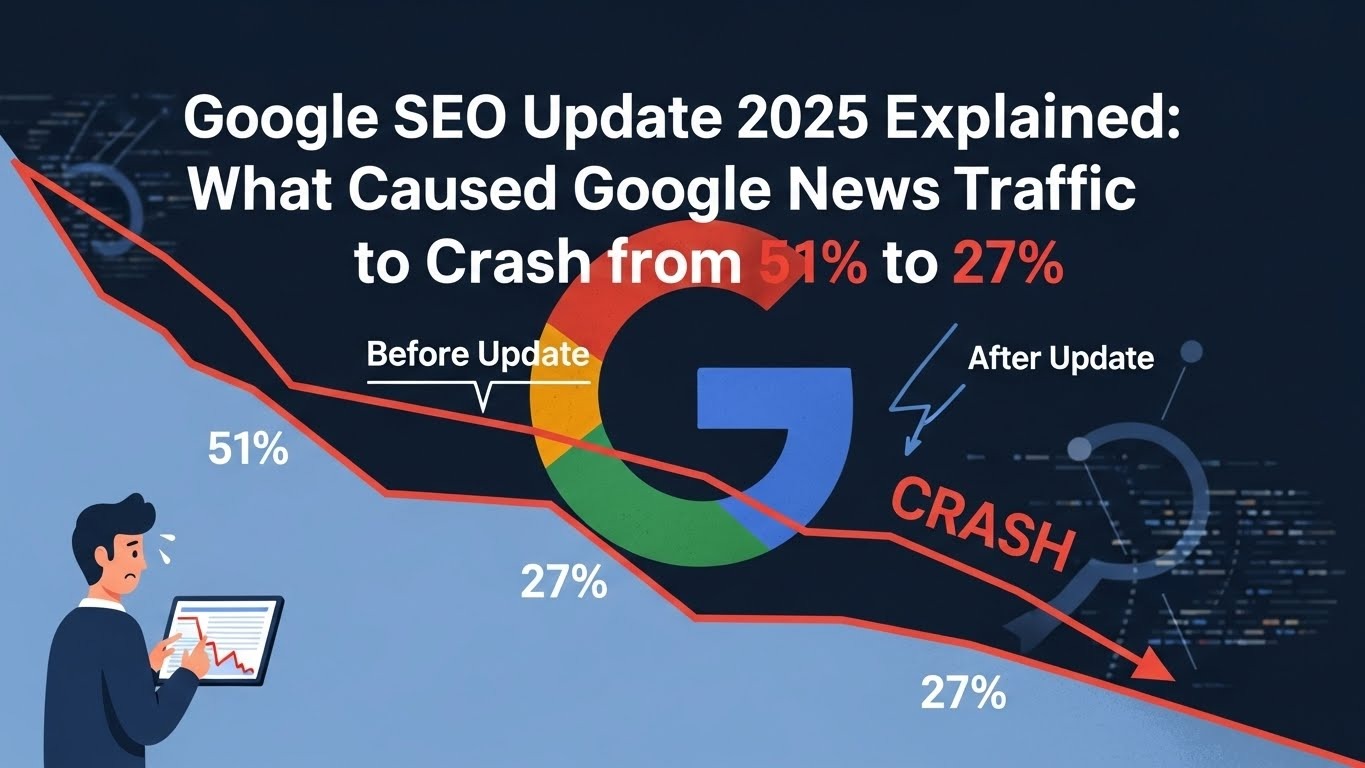
In 2023, over half of all clicks on news sites from Google came from people typing in searches. Today, that number is down sharply. A recent analysis shows a major shift in where publishers get their Google News Traffic. That traffic from traditional web search has fallen from 51% to 27% in just two years. This is not a small change. It is a fundamental change in how people find news online.
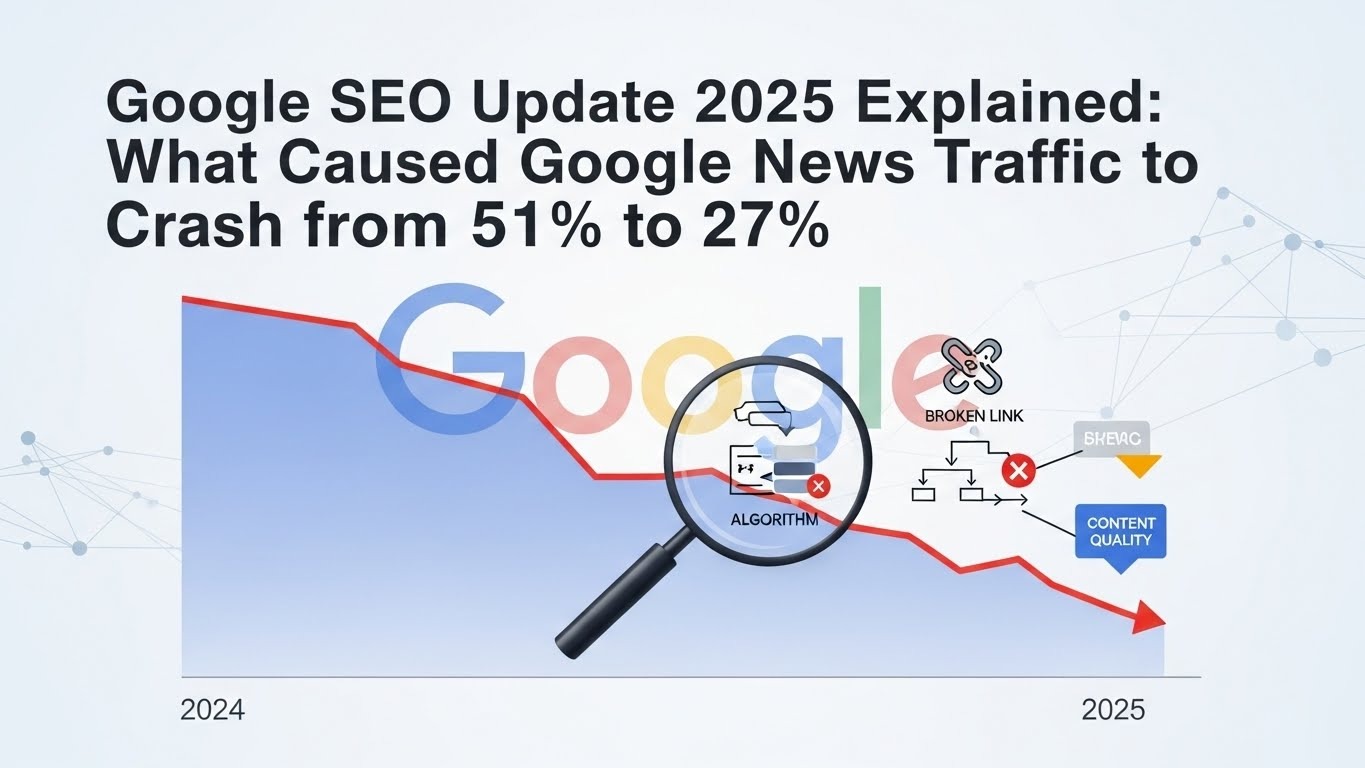
Here, we will explain the 2025 SEO update that led to this crash. It shows what the change means for your website and your strategy.
Understanding the Google News Traffic Shift
The data comes from an analysis of over 400 news publishers worldwide by NewzDash. The findings were clear. Two years ago, traditional Google Web Search was the main source of visits. It sent 51.10% of all traffic from Google to these sites. At the same time, the Google Discover feed sent 37.03%. Today, those numbers have flipped completely. Google Discover now sends 67.51% of traffic. Traditional search sends only 27.42%. This means Google News Traffic now flows primarily through a feed, not a search box. For publishers, this is a critical change. It changes what they must do to be seen.
What Changed in 2025: The Algorithm Shift
Google did not announce a single update called the "News Traffic Crash." Instead, a series of core updates in 2024 and 2025 changed how the system works. These updates refined what Google values. They changed how it ranks content in search results and in the Discover feed.
The goal of these updates was to reward different things. Google now strongly favors experience, expertise, authoritativeness, and trustworthiness. This is the E-E-A-T framework. It is not just a concept. It is a direct ranking signal. For Google News Traffic, this meant a big change. Sites that looked like content farms or simply republished press releases lost their position. Sites with deep reporting, original investigation, and recognized authority gained ground.
The updates also changed how Google understands user intent. Before, a search for "latest election news" might show a list of recent articles from many sources. Now, Google's systems try to understand the full context of the story. They look to present a more complete, authoritative picture. This often happens in Discover. The feed can show a single, in-depth explainer from a trusted source instead of ten similar headlines from different sites. This consolidation of attention is a key reason for the drop in search clicks to general news publishers.
Why Discover Is Different from Search
To adapt, you need to know how Discover works. It is not the same as search.
- Search is pull: A user has a question and types it in. Your content is the answer.
- Discover is push: Google's system predicts what a user wants to see before they ask. It pushes your content to them.
Getting Google News Traffic from Discover depends on new rules.
1. Topic Authority is Essential: Google determines which sites are true experts on specific topics. A site known for great tech reviews will get its tech stories pushed in Discover. That same site's political commentary might not be shown, even if it is well-written. You must build a strong, clear reputation in your niche.
2. Freshness and Momentum Matter: Discover favors content that is new and gaining attention. A major investigative piece that gets shared and linked to quickly is perfect for the feed. An old article, even if it is evergreen, typically is not.
3. Engagement Signals are Key: Click-through rate from the feed is vital. So is time spent on the page and low bounce rates. If users see your headline in Discover and do not click, or click and leave quickly, Google will stop showing it. The content must hook the reader immediately and satisfy their interest.
How to Adapt Your Strategy for the New Reality
You can no longer rely on search alone for Google News Traffic. You need a dual strategy. You must optimize for both traditional search intent and the Discover feed.
First, strengthen your foundation for E-E-A-T.
- Clearly display author bios with credentials and experience.
- Cite sources and data in your reporting.
- Correct errors transparently and update old articles.
- Build a strong backlink profile from reputable, relevant sites. This proves your authority to Google.
Second, actively optimize for Google Discover.
- Create high-quality, evergreen explainers: Go deep on big topics in your field. A comprehensive guide to AI regulation will attract sustained clicks over time. This builds topic authority.
- Use compelling, large images: Discover is a visual feed. Images must be at least 1200 pixels wide and engaging without being clickbait.
- Write fantastic headlines: Headlines need to be clear, descriptive, and spark curiosity. They must tell the user exactly what they will learn.
- Monitor your performance: Use the "Discover" report in Google Search Console. See which topics and formats work. Do more of that.
The drop from 51% to 27% is not a failure of search. It is a shift in user behavior that Google is following. People are spending more time on feeds. They want a curated flow of information. Your job is to make your content worthy of that curation.
Final Thoughts on Google News Traffic
The era where generic news snippets ranked well in search is fading. The future of Google News Traffic belongs to publishers with deep expertise. It belongs to those who create original, valuable content that earns user engagement. This shift is permanent. Google is directing traffic to where users are already going. That place is increasingly the Discover feed. To recover your traffic, do not try to game the old search system. Establish a reputation as a trusted and authoritative source on your topics. Create content that people want to click on and read fully. The traffic will follow, just from a different place.


.svg)
.svg)
.svg)
.svg)